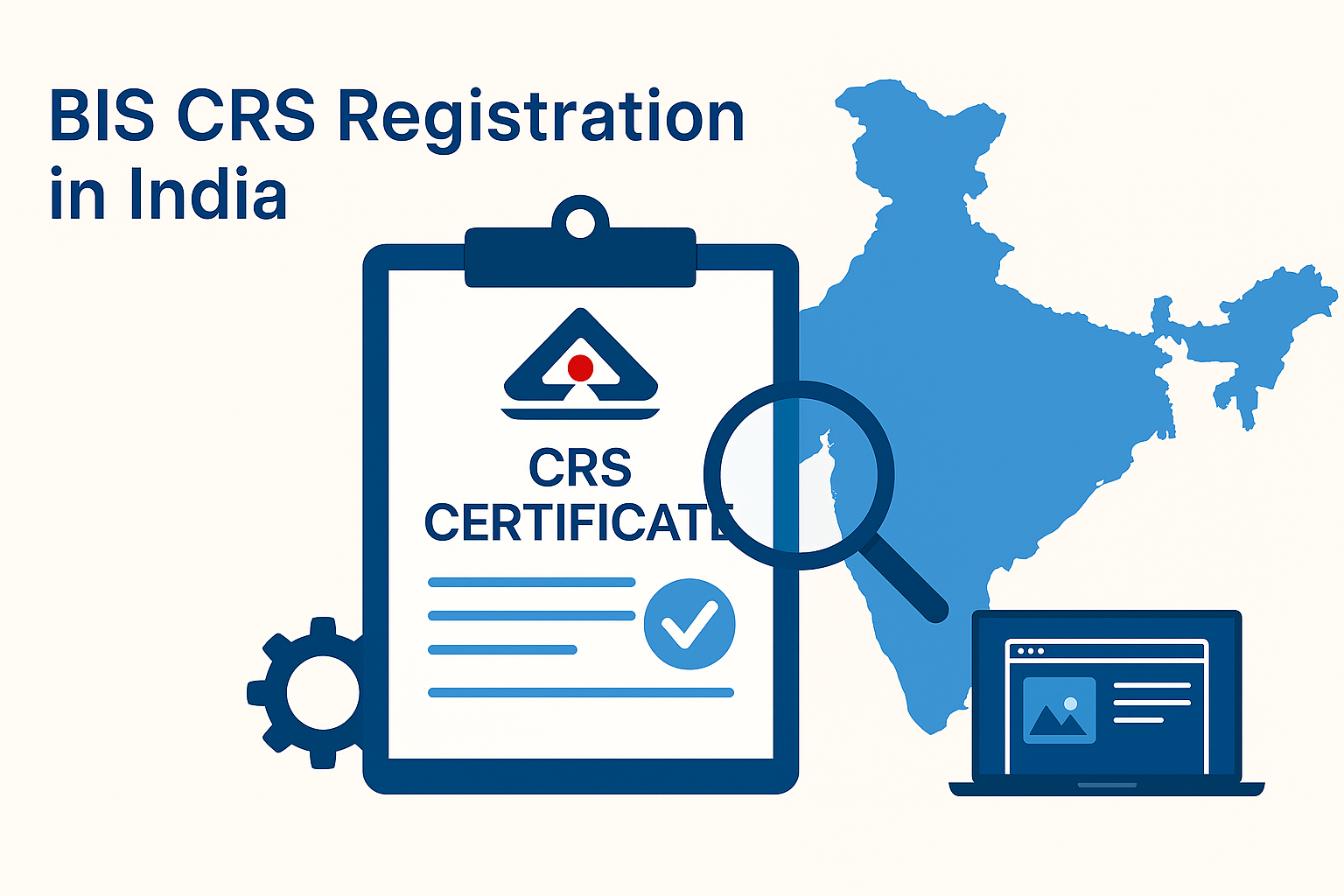
So, you want to sell electronics or IT products in India? Great choice India's tech market is absolutely exploding right now. But here's the thing: before your products can hit the shelves (or online stores), you need something called BIS CRS Registration.
I know, I know—more paperwork, more compliance, more bureaucracy. But trust me, this one's important. And once you understand how it works, it's not as scary as it sounds.
The Indian government takes product safety seriously, especially when it comes to consumer use. That's why they've made BIS CRS Scheme mandatory for Electronics and IT products. It's basically their way of making safety of the gadgets for consumer use that it won't catch fire, shock them, or break down.
What Exactly is the Compulsory Registration Scheme?
The Compulsory Registration Scheme (or CRS, because nobody has time to say that whole thing) is Self-declaration scheme run by the Bureau of Indian Standards that's BIS for short under Scheme - II of Schedule - II of BIS (Conformity Assessment) Regulations, 2018 It is Regulated by India's Ministry of Electronics and Information Technology. Over the time being other ministry joins the scheme, such as MNRE (Ministry of new and renewable energy of India), Ministry of Chemicals and Fertilizers, Ministry of Textile
What is self-declaration Scheme in CRS?
Manufacturers (Indian or foreign) must submit a self-declaration stating that their product conforms to the applicable Indian Standard (IS) and complies with BIS requirements.
Here's how it works: If you are manufacturer of the electronics and IT products, you've got to get it tested with BIS approved labs, make sure it meets safety as per Indian standards, and then register it with BIS. Once you're approved, you get to put the Standard Mark with unique R-number, on your product. Think of it as a quality badge that brings safety and brings trust to customers, which is most significant for manufacture and brand owners. "Hey, this product is legit and safe to use."
The scheme kicked off back in 2012, with 15 products and over the time being grew up to 74 products. Specifically covers electronic and IT products that could be risky if they don't meet proper safety standards.
Who Actually Needs This Registration?
This is where a lot of people get confused, so pay attention.
BIS has a simple philosophy: the manufacturer is always accountable.
You definitely need this if you're:
You cannot get this registration if you're:
Even if you're bringing products into India from overseas, the actual manufacturer has to handle the registration. There's no way around this one.
Which Products Actually Need Registration?
The government doesn't require every single electronic gadget to go through this process—just the ones on their official list.
Here are the usual suspects:
Now here's something important: this list isn't set in stone. The government updates it from time to time, so always double-check the latest notifications before you launch anything new.
Not 100% sure if your product needs this? Check detailed product coverage guide
What about the Refurbished/Repaired/Second Hand Items Electronics and IT products
If you’re thinking of any relaxation, Sorry, Sorry ….Not this time.
All the Refurbished/Repaired/Second Hand Items Electronics and IT products entering to the Indian market through any route must have valid Standard Mark with unique R-number.
Recognition of Indian Standards (IS)
Every product that needs CRS registration must meet specific Indian Standards these are basically technical rulebooks that spell out safety and performance requirements.
These standards cover stuff like electrical safety (so your product won't electrocute anyone), fire protection (so it won't burst into flames), and overall build quality. Getting the right standard for your product is really, really important. Choose the wrong one, and your whole application gets rejected. That means starting over from scratch.
Different products follow different IS codes. Mobile phones have their own set of rules, Solar PV module have another, and so on.
The Registration Process (Without the Headache)
Alright, let's walk through what actually happens when you apply for BIS CRS Registration.
First things first: Figure out if your product even needs registration, then identify which Indian Standard applies to it.
Next up: Send your product samples to a BIS-recognized lab for testing. They'll put it through its paces to make sure it meets all the requirements.
Then comes the paperwork: Fill out the online application form with all your documents and test reports. This is where most people make mistakes.
BIS reviews everything: Their team goes through your application with a fine-tooth comb. They might ask questions or request clarifications and deep dive until there satisfaction. How quickly you respond matters here.
Finally: If everything checks out, you get your registration and permission to use the Standard Mark with unique R-number on your products.
Sounds straightforward, right? It can be—if you know what you're doing and have all your ducks in a row.
Why So Many Companies Hire Experts for This
Look, I'll be honest with you. A lot of applications get delayed or rejected because of simple mistakes—wrong documents, incorrect standard selection, incomplete test reports, you name it.
That's why many manufacturers work with expert consultants like KMA Global. They handle all the technical stuff, coordinate with the testing labs, and manage all the back-and-forth with BIS. Basically, they make sure everything's done right the first time.
Want professional help? Learn about our BIS CRS registration services
What Documents Do You Need?
BIS wants to know everything about your company, your factory, and your product. Here's the typical list:
Missing even one document or making small errors in your paperwork causes most delays or leads to rejection. Getting it right from the start saves you weeks (sometimes months) of frustration.
How Long Does Registration Last?
Your BIS CRS Registration is valid for two years. Before it expires, you need to apply for renewal maximum upto 5 years. Don't wait until the last minute for this.
You might need fresh testing if:
Also, heads up BIS sometimes does surprise compliance checks. Staying on top of your compliance isn't just about avoiding penalties; it's about peace of mind.
Mistakes That Slow Everything Down
I've seen these mistakes happen over and over again. Learn from other people's headaches:
Mistake #1: Incomplete Application: Manufactures can’t submit right documents, and they even able to figure it out, what exactly need by BIS, leads to Rejection.
Mistake #2: Picking the wrong Indian Standard: This happens more often than you'd think. Each product has its specific IS code—use the wrong one, and you're back to square one.
Mistake #3: Submitting incomplete test reports Your test reports need to tick every single box in BIS's requirements. Missing something? That's a delay right there.
Mistake #4: Being slow to respond When BIS asks for clarifications or additional info, respond quickly. Every day you wait is another day your registration gets pushed back.
The good news? All of these are completely avoidable with proper preparation.
Why Companies Choose KMA Global
At KMA Global, we've helped countless Electronics and IT Manufacturers get their BIS CRS Registration—both Indian companies and international businesses entering the Indian market.
We don't just file applications and hope for the best. We're with you through the entire journey:
What we actually do:
What this means for you: Faster approvals, Fewer headaches, Faster clearance at port and a Smooth entry into India's booming electronics market.
Whether you're Manufacturing in India or shipping from overseas, we make BIS compliance makes easy and painless.
Ready to get started with your BIS CRS Registration? Let’s Connect, Chat and Collaborate with KMA Global today, and we'll walk you through exactly what you need to do.
Because getting into the Indian market shouldn't feel like running an obstacle course.
About The Author
Ashwini Kumar is an Electronics Engineer with over nine years of professional experience in Regulatory Affairs, as well as the Solar and Lighting industries, with a strong record of working in regulated and technology-driven environmen...Read More


Jun 26, 2026
EPR Registration for End-of-Life Vehicles
Jun 24, 2026
EPR Registration for E-Waste Management in India