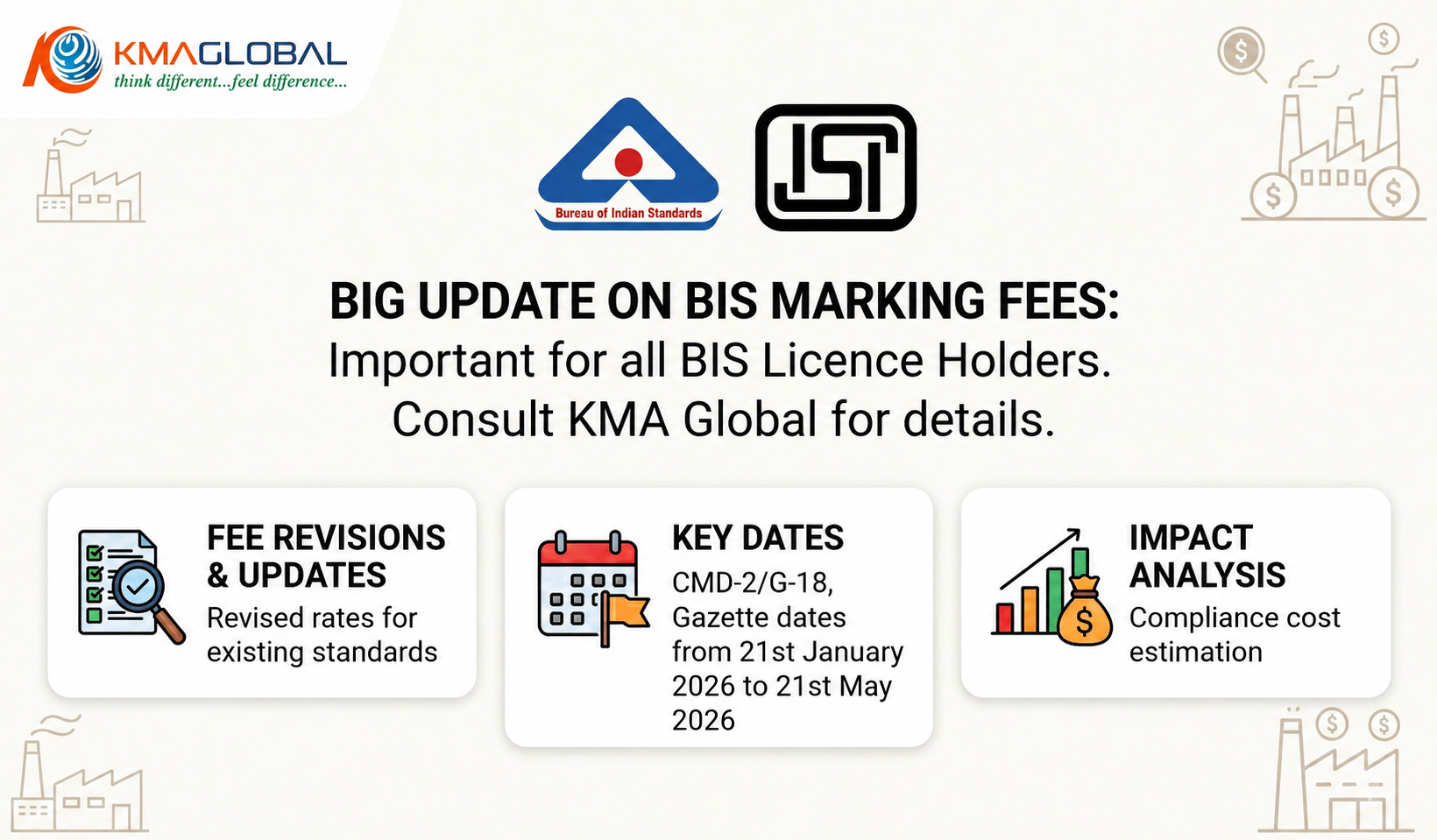

BIS has officially shifted FMCS applications to an online portal system and this is more than just a procedural update; it has completely changed how applications are reviewed, scrutinized and processed.
The reality is simple:
That means even small errors can directly turn into:
Most manufacturers still assume BIS approval depends mainly on testing. But in today’s FMCS system, the real bottleneck is application quality.
Here are the 7 mistakes silently slowing down BIS approvals and how to avoid them.
It sounds basic, but it’s one of the biggest hidden issues. Applications often fail because:
Since BIS communication is now heavily portal-based, even one wrong email can stall the entire process.
This is where many applications get flagged immediately. If your Product name and Indian Standard Number don’t match exactly, BIS officers notice it instantly.
Even a minor mismatch can trigger unnecessary scrutiny.
Many applications still write “general product details” instead of technical specifics.
But BIS expects clarity like:
If it’s not specific, it becomes unclear for sampling, evaluation and approval.
This is more serious than most applicants realize.
Not declaring:
creates a credibility gap in the application history.
BIS doesn’t just want a list, it wants proof of capability.
Common issues:
If the facility details are unclear, approval slows down immediately.
A factory layout should show where manufacturing and testing actually happen, but many manufactures submissions are:
This leads to avoidable clarification cycles.
One of the fastest reasons applications get stuck.
Issues include:
In FMCS, documentation completeness is as important as the test result itself.
The FMCS system is no longer informal or flexible in the way it processes applications.
With the new online portal:
Getting BIS FMCS approval today is less about “trying your luck” and more about “getting the filing right the first time.”
The new online portal doesn’t give flexibility for incomplete or unclear applications. Even small gaps can quickly turn into delays, repeated queries or rejection risks.
The manufacturers who are getting faster approvals are the ones who are clear, precise and fully prepared before submission.
Before hitting submit, make sure:
Because in the new BIS online system.
What you submit is exactly what gets evaluated. No second chances to fix basics.
And that’s where the right guidance makes all the difference.
BIS has shifted FMCS applications to an online portal system where every detail is recorded and tracked. The portal now flags inconsistencies much earlier in the process, which means even small mistakes can lead to delays, queries, re-submissions, or rejection risks.
Applications often get delayed when email IDs are inactive, AIR details are incomplete, or contact persons are not properly identified. Since BIS communication is now portal-based, even one wrong contact detail can slow down the approval process.
If the Product name and Indian Standard Number do not match exactly, BIS officers can immediately flag the application. Even small mismatches may create unnecessary scrutiny and delays during review.
BIS expects clear technical details such as exact size, type, grade, and model or variant information. Using only general product descriptions can make sampling, evaluation, and approval more difficult.
BIS expects proper factory layouts, machinery details, calibration status, and testing capability proof. If these details are incomplete, unclear, or outdated, the approval process can slow down significantly.
Before submission, manufacturers should ensure that product details match the applicable Indian Standard, test reports are complete, factory layouts are properly labelled, machinery data is updated, AIR details are correct, and no previous application history is hidden.
About The Author
Megha Solanki is a Food Technologist with over 2 years of experience in regulatory compliance and conformity assessment with hands-on exposure to BIS certification procedures, food safety regulations and statutory compliance requiremen...Read More
Jun 26, 2026
EPR Registration for End-of-Life Vehicles
Jun 24, 2026
EPR Registration for E-Waste Management in India