Introduction
Geysers have become an essential appliance in modern households, hotels, hospitals, hostels, and commercial establishments. Since geysers consume a significant amount of electricity, their energy efficiency, safety, and performance play a crucial role in reducing power consumption and operating costs.
To regulate energy usage and promote energy-efficient appliances, the Government of India, through the Bureau of Energy Efficiency (BEE), has made BEE certification for geysers mandatory under the Energy Conservation Act, 2001. This certification ensures that only efficient, safe, and quality-approved geysers are sold in the Indian market.
Let BEE Registration under the Ministry of Power guide your products’ energy efficiency, lighting the way for sustainability, smart choices, and a brighter, greener future.
What is BEE Certification for Geysers?
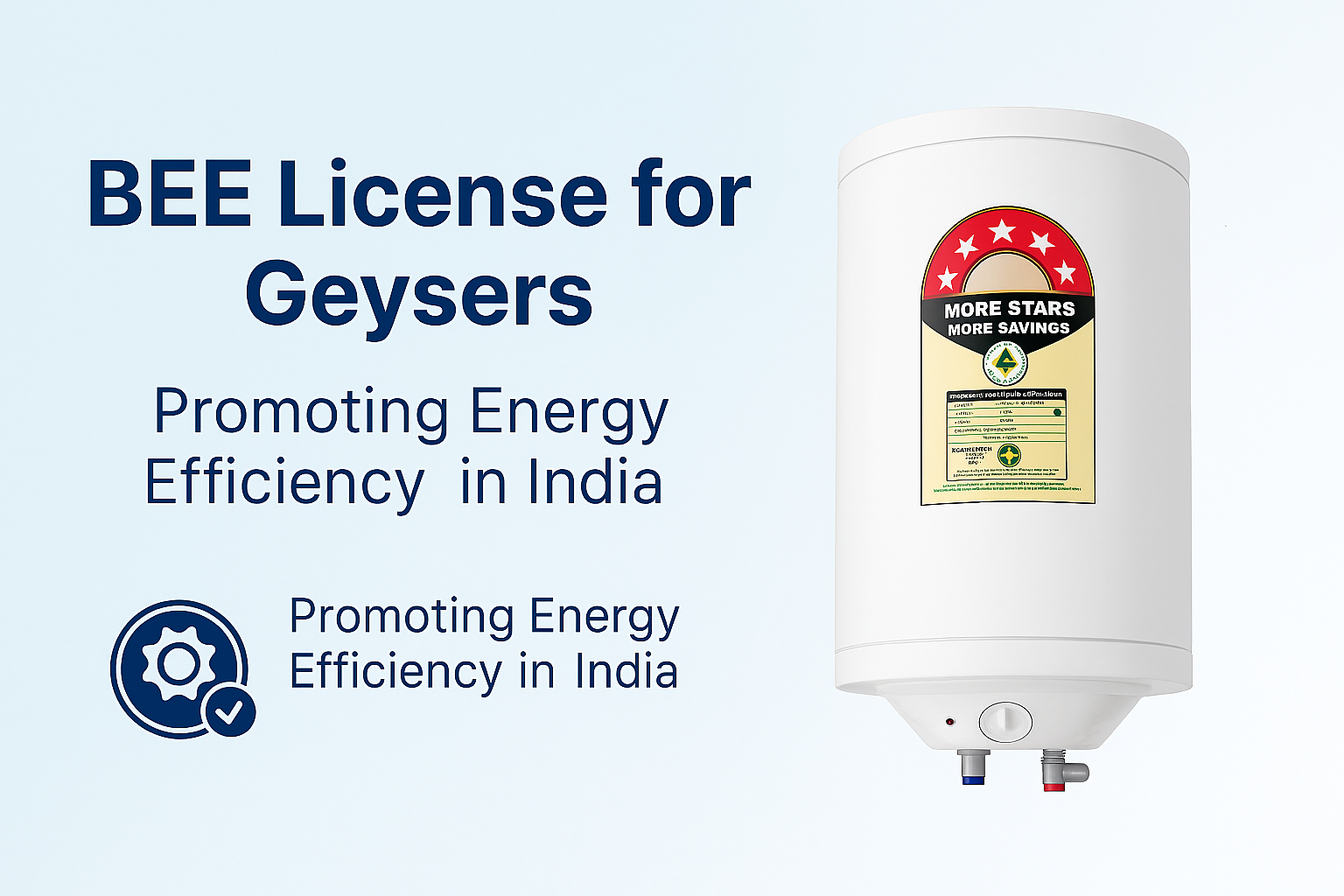
BEE certification for geysers is an official approval issued by the Bureau of Energy Efficiency that confirms a geyser model meets prescribed energy efficiency standards. Once certified, the product is eligible to carry a BEE Star Rating, which clearly indicates its electricity consumption efficiency.
Geysers with higher star ratings consume less energy, helping consumers save on electricity bills while supporting environmental sustainability.
Why is a BEE License for Geysers Mandatory?
A BEE License for geysers is mandatory for:
Any geyser falling under the notified category cannot be manufactured, imported, sold, or distributed in India without BEE registration.
Key Benefits of BEE Registration for Geysers
BEE-approved geysers help eliminate inefficient products from the market and promote responsible manufacturing.
Star Rating for Geysers Explained
The Star Rating for geysers generally ranges from 1 Star to 5 Star:
This rating system allows consumers to easily compare geysers and select models that offer the best balance of performance and long-term savings. From a business standpoint, higher star-rated geysers gain better market acceptance and competitiveness.
Certification for Geysers & Quality Standards
Apart from energy efficiency, certification for geysers also ensures compliance with safety and quality standards. Geysers must undergo quality certification to verify:
This comprehensive evaluation minimizes the risk of failure and enhances consumer confidence.
Geysers Test & Drop Test for Geysers
Before obtaining BEE approval, geysers must pass several technical evaluations at BEE-recognized laboratories.
A drop test for geysers is conducted to assess physical durability during handling and transportation. This test ensures the product can withstand minor impacts without functional or structural damage, adding an extra layer of reliability and safety.
BEE Registration Process for Geysers
The BEE registration process for geysers typically involves the following steps:
Product Testing
Geyser models are tested in BEE-approved laboratories for energy efficiency and quality compliance.
Document Preparation
Required documents include:
Online Application Submission
The application is submitted on the official BEE portal along with applicable government fees.
Review & Verification
BEE examines the application and test results to ensure compliance with notified norms.
Issuance of BEE Certificate & Star Label
Upon approval, the product is listed as a BEE Approved Geyser and can legally carry the star label.
Validity & Renewal of BEE Certification for Geysers
BEE certification is granted for a specific validity period and must be renewed before expiry. During renewal, manufacturers must comply with updated energy efficiency standards and submit revised test reports if required.
Timely renewal ensures uninterrupted product sales and continued regulatory compliance.
Conclusion
BEE certification for geysers plays a vital role in ensuring energy efficiency, safety, and product reliability in India. Through strict testing, quality certification, and transparent star ratings, BEE helps reduce electricity consumption and promotes informed consumer choices.
For manufacturers and importers, obtaining a BEE License for geysers is not just a legal requirement but a strategic step toward building trust, market credibility, and sustainable growth. With comprehensive testing, including geysers tests and drop tests, BEE Approved geysers deliver long-term performance, cost savings, and environmental benefits—supporting India’s mission for energy conservation and sustainability.
BEE certification is mandatory for geysers that fall under the notified product category by the Bureau of Energy Efficiency. This typically includes electric storage water heaters sold in the Indian market. The applicability may vary based on product type and capacity.
No. Imported geysers must obtain BEE registration before customs clearance and sale in India. Importers are responsible for ensuring compliance, including product testing and star labeling.
Applications can be filed by:
Manufacturers
Importers
Brand owners
Authorized Indian representatives (AIR) for foreign manufacturers
The applicant must hold valid authorization for the brand and model.
The timeline depends on product testing, document readiness, and BEE review. On average, the process may take 3 to 6 weeks, provided there are no discrepancies or resubmissions required.
Selling geysers without a valid BEE license can lead to:
Monetary penalties
Product seizure
Legal action under the Energy Conservation Act
Cancellation of future approvals
Compliance is essential to avoid regulatory risks.
In many cases, BIS certification and BEE certification are both required, as BIS focuses on safety and product standards while BEE addresses energy efficiency. The exact requirement depends on the product category and notification.
Yes. Manufacturers can apply for a higher star rating by conducting fresh testing and submitting updated reports to BEE. Approval is granted only after meeting the higher efficiency benchmarks.
Generally, BEE certification for geysers does not involve routine factory inspection. However, BEE reserves the right to conduct audits or inspections if required for verification or compliance checks.
BEE periodically revises energy efficiency criteria to align with technological advancements and national energy goals. Manufacturers must comply with revised norms during renewal or model updates.
No. BEE certification is non-transferable. Any change in brand ownership, manufacturer details, or legal entity requires fresh registration or formal approval from BEE.
KMA Global provides complete support, including:
Eligibility assessment
Lab testing coordination
Documentation & application filing
Star label approval
Renewal & post-certification compliance
This ensures faster approvals and zero compliance gaps.
About The Author
Megha Solanki is a Food Technologist with over 2 years of experience in regulatory compliance and conformity assessment with hands-on exposure to BIS certification procedures, food safety regulations and statutory compliance requiremen...Read More


Jun 26, 2026
EPR Registration for End-of-Life Vehicles
Jun 24, 2026
EPR Registration for E-Waste Management in India