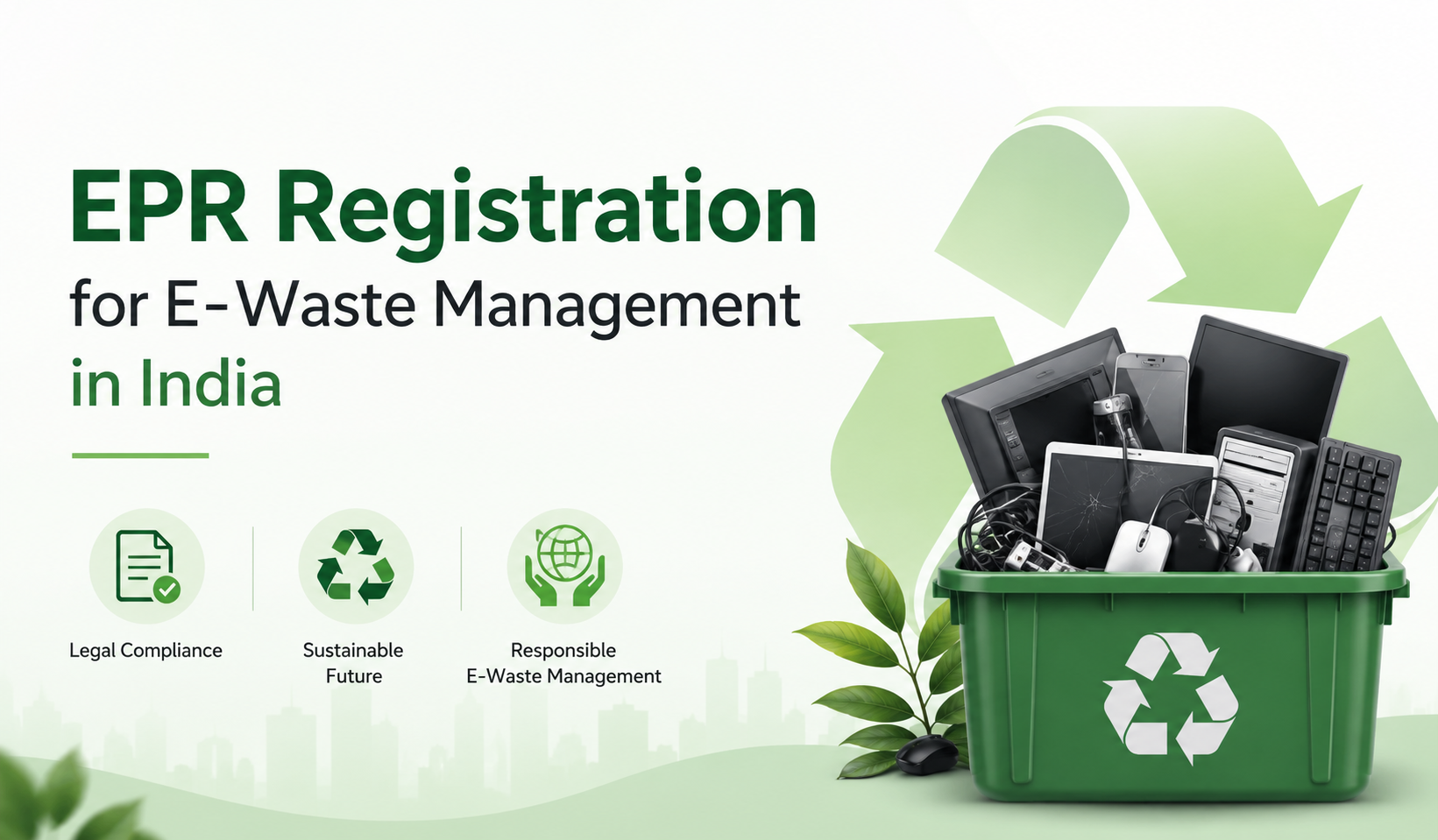
The E-Waste management is the systematic collection, recycling, and disposal of electronic device such as Computer peripherals, Mobile phone, Television, Printer, and Refrigerators and other type electronic device useful in life. As per consumer demand for new electronic product the volume of e-waste generated in worldwide is growing.
E-Waste management is the process of collection, storing, transportation, recycling, reusing and safe dispose of electronic device waste to minimize the harmful effects on human health and the environment. In electronic device contain raw material such as Silver, Gold, Copper, Aluminium which can be reuse.
The Government of India introduced the E-Waste (Management) Amendment Rules, 2024, which mandate Extended Producer Responsibility (EPR) registration for producer, importer, recycler, refurbishes, and collection dispose of e-waste involved in electrical and electronic equipment (EEE).
E-Waste Management to the electrical and electronic equipment such as computers, laptops, mobile phones, televisions, printers, refrigerators, air conditioners, and other electrical and electronic devices in an environmentally sound manner.
The primary objective of E-waste management is to:
Goals of E-Waste Management
The goal of e-waste management is to protect the environment and human health while maximizing resource recovery through the safe collection, recycling, reuse, and disposal of electronic waste.
Extended Producer Responsibility (EPR) for E-waste applies to all engaged entity like producer, importer, recycling in supply chain who introduce scrap electronic device into the Indian market. Compliance is mandatory under the environment protection E-Waste Management Rules, 2022. The following unit producer, importer, manufacture, recycler, other electric device or assembly and sale of electronic device under its own brand must be responsible for E-waste EPR Registration/Certification. The entities registered on the portal shall not deal with any unregistered manufacturer, producer, recycler and refurbisher.
Producer : Any entity (including importers and brand owners) placing electrical or electronic equipment (EEE) in the Indian market is required to obtain EPR authorization.
Manufacturer : Companies manufacturing Electrical and Electronic products in India must register to ensure proper end-of-life management of EEE (Electrical and Electronic Equipment) their equipment.
Recycler : Authorized recyclers engaged in dismantling and recovering valuable materials such as silver, aluminium, coper, gold from e-waste must be registered with CPCB.
Refurbisher : Repairing or refurbishing used electronics for resale or reuse are required to register and comply with EPR obligation.
Brand owner : Under the brand owner which EEE is sold in India, with full EPR accountability for those products.
Note- If your company is involved in producing, importing, or branding electronic equipment, you must obtain an EPR Certificate for E-Waste to legally operate in India. This mandatory compliance not only ensures legal authorization but also builds trust with customers, showing that your business is committed to sustainable and eco-friendly practices.
The management of electronic waste in India is governed by the E-Waste (Management) Rules, 2022, to strengthen the framework of waste collection, recycling, and disposal. These rules clearly define the responsibilities of producers, importers, manufacturers, brand owners, recyclers, and dismantlers to ensure a sustainable system for handling E-Waste. Registered with the Central Pollution Control Board (CPCB) for EPR authorization. Full-fill annual collection and target base on quantity of product sold in the market. Ensure E-Waste is processed only through CPCB-authorized recyclers and dismantlers. Submit annual compliance report on CPCB portal with in the prescribe timeline.
The E-Waste (Management) Rules, 2022 cover a wide list of electrical & electronic equipment notified in Schedule I, group into broad categories. Each category your business places on the market is included in your EPR obligation.
| EEE Category Example | Products | EPR Relevance |
|---|---|---|
| IT & Telecommunication | Computer peripherals, printer, mobile phone, router, server, Transmitters, Wakie-Takie, scanners, tablets, GPS. | High volume category common for producer and importer & covered under the EPR Category. |
| Consumer Electronics | Televisions, Audio systems, camera, set-top box, Hi-Fi Recorder, Video recorder | Covered as notified consumer EEE |
| Large & Small household appliances | Refrigerators, washing machines, microwaves, fans, mixers, Electric Stoves & cookers | Include under household EEE category |
| Electrical and Electronics Tool | Drill, saw, soldering tool and similar power tool. | Covered where notified under Schedule I |
| Lighting Equipment | LED lamps, Luminaires and electronic lighting products | Included as notified lighting EEE |
| Medical and Laboratory Device | Notified medical and laboratory electronics instrument | Covered for applicable notified device |
Under the E-Waste Management Rules 2022, EPR registration is completed through the online portal of the Central Pollution Control Board (CPCB). The official application is filed on the CPCB portal.
The following documents are generally required for EPR registration on the CPCB portal.
Once the application submitted by stakeholder, CPCB will follow the below procedure for processing the application for grant of registration.
Getting EPR Certificate for E-Waste is only the first step. This certificate by authorization is granted, companies must fulfill several responsibilities as prescribed by the CPCB under the E-Waste (Management) Rules, 2022. These obligations ensure that electronic waste is managed in a safe and environmentally sound manner.
Grant of EPR Registration processing fees for Producers seeking EPR registration under E-Waste (Management) Rules 2022 is given as below
| Sr.No. | Annual E-waste recycling target in MT | Registration Fees Amount (INR) |
|---|---|---|
| 1 | < 50 MT | 25,00.00 |
| 2 | 50 MT to < 100 MT | 75,00.00 |
| 3 | 100 MT to < 1000 MT | 150,000.00 |
| 4 | 1000 MT to <5000 MT | 1,00,0000.00 |
| 5 | >5000 MT | 15,00,000.00 |
Note- For Producers whose sales just started, the processing fee will be Rs. 10,000.
The fee structure for registration of recycler, refurbisher & manufacture and annual maintenance charges for all stakeholders for registration on EPR Portal under E-Waste (Management) Rules, 2022.
| Sr.No. | User Type | Activity | Fees/Charges |
|---|---|---|---|
| 1 | Recycler | New Recycler (1st time registration valid for five years) | 15,000.00 |
| 2 | Recycler | Renewal of registration (after five years) | 7,500.00 + Rs 0.625/MT for quantity of EPR certificate transaction in the preceding five years |
| 3 | Recycler | In case of any amendments | 3,000.00 |
| 4 | Refurbisher | New Refurbusher (1st time registration- valid for five years) | 15,000.00 |
| 5 | Refurbisher | Renewal of registration (after five years) | 7,500.00 + Rs 0.625/MT for quantity of Refurbishing certificate transaction in the preceding five years |
| 6 | Refurbisher | In case of any amendments/addendum | 3,000.00 |
| 7 | Manufacturer | One Time Registration | 15,000.00 |
| 8 | Annual Maintenance charges for all stake holders | Annual maintenance charges for Producers, Recycler, Refurbisher and Manufacturer | 5,000.00 |
EPR (Extended Producer Responsibility) Registration for E-Waste Management help to producers, manufacturers, importers, refurbisher, and recyclers by ensuring compliance with the E-Waste (Management) Rules, 2022 and promoting environmentally sound management of electrical and electronic waste.
Legal Compliance: Ensure compliance with E-waste Management Rule 2022.Help avoid penalties, environmental compensation, and legal actions for non-compliance.
Enhanced Business Credibility: Improves the organization reputation among customers, investors, and business partners. Build trusts its brand and product.
Environmental Protection: Minimizes the release of hazardous substances into soil, water, and air. Improves resource efficiency and reduces waste generation.
Long-Term Business Sustainability: Reduces regulatory risks and compliance. Supports responsible growth and environmental.
Promotion of Circular Economy: Promote reuse, refurbishment, recycling, and recovery of valuable materials from e-waste. Promote sustainable production and consumption practices.
Avoidance of Penalties and Legal Risks: Non-compliance with E-Waste rules by entities can apply in fines, cancellation of licenses, or restrictions on product sales. EPR authorization helps businesses operate without the risk of legal action.
Smooth Import & Export Compliance: EPR registration helps businesses comply with environmental regulations applicable to electrical and electronic equipment, reducing the risk of customs delay and penalties while facilitating seamless domestic and international trade operations.
E-waste compliance is vital for sustainable business operations and environmental protection. KMA Global streamlines the entire Extended Producer Responsibility (EPR) registration process by providing expert guidance, comprehensive documentation support, and end-to-end compliance management. With our deep industry expertise, we help your business meet regulatory standards efficiently, allowing you to focus on growth while contributing to a greener future.
About The Author
Arun Pratap Singh is specialization of Mechanical Engineer with over three years of experience in corrugated box and 1.5 year experience in Wind Renewable Energy .
Professional Experience
Read More


Jun 26, 2026
EPR Registration for End-of-Life Vehicles
Jun 24, 2026
EPR Registration for E-Waste Management in India