Workplace accidents rarely occur without warning. In most cases, incidents happen because hazards were not properly identified or risks were underestimated. Organizations operating in industries such as manufacturing, construction, food processing, and logistics often deal with complex operational environments where unsafe conditions, equipment failures, or human errors can lead to injuries or operational disruptions.
Many organizations still rely on informal safety checks or reactive incident management, addressing issues only after an accident occurs. This approach not only puts employees at risk but can also lead to regulatory penalties, reputational damage, and financial losses.
To prevent such situations, modern safety management frameworks emphasize proactive hazard identification and systematic risk assessment. This is a key requirement of the ISO 45001 Occupational Health and Safety Management System (OHSMS).
ISO 45001 risk assessment is a structured process used to identify workplace hazards, evaluate associated risks, and implement controls to prevent injuries and occupational illnesses.
The standard requires organizations to establish processes for:
This systematic approach helps organizations shift from reactive safety management to preventive risk control.
By evaluating these aspects, organizations can build a comprehensive workplace safety risk assessment framework.
The first step in ISO 45001 risk assessment is hazard identification in the workplace.
A hazard is anything with the potential to cause harm, injury, or illness.
Identifying these hazards is essential for establishing effective risk control measures.
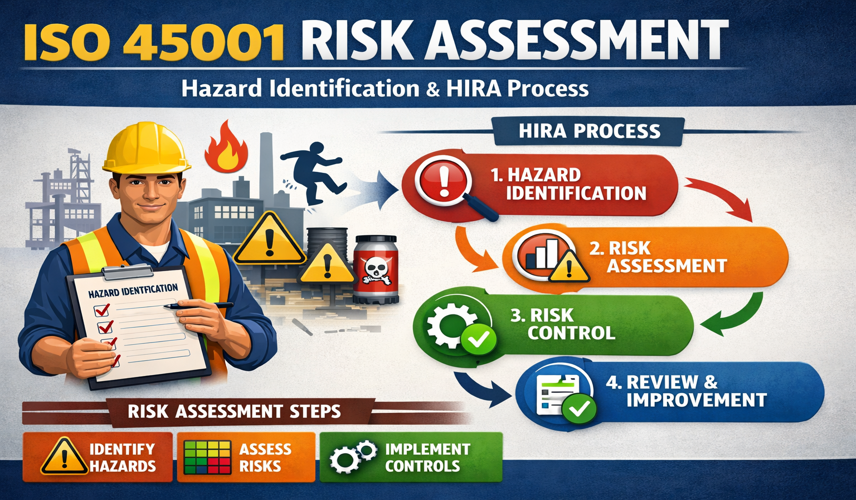
The HIRA process (Hazard Identification and Risk Assessment) is a structured method used to evaluate workplace hazards and determine their associated risks.
Organizations implementing ISO 45001 sometimes make avoidable mistakes.
Avoiding these mistakes improves the effectiveness of the ISO 45001 risk assessment process.
Organizations can strengthen their safety management systems by adopting the following practices:
Hazard identification and risk assessment are fundamental elements of the ISO 45001 Occupational Health and Safety Management System. By systematically identifying hazards and evaluating risks, organizations can prevent workplace incidents, improve safety culture, and maintain regulatory compliance.
A well-implemented ISO 45001 risk assessment process enables organizations to proactively manage occupational hazards while strengthening operational reliability and employee well-being.
Taking a proactive approach to workplace safety today can help organizations build safer, more resilient workplaces for the future.
About The Author
Technical professional in management system standards training support, quality documentation, and coordination. Brings a strong analytical background with expertise in structured reporting, compliance-focused content, and training ope...Read More



Jun 26, 2026
EPR Registration for End-of-Life Vehicles
Jun 24, 2026
EPR Registration for E-Waste Management in India