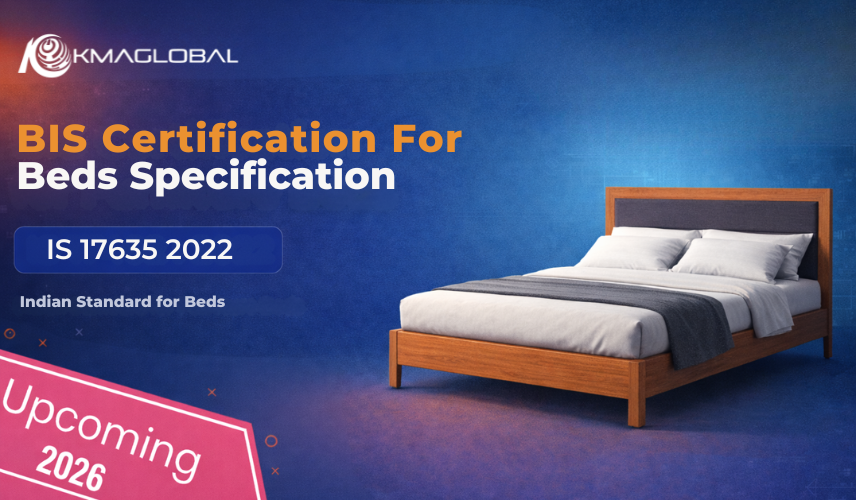
Beds are among the most essential furniture products used in both domestic and non-domestic environments. Due to their continuous use and direct impact on user safety, beds must meet defined requirements for stability, strength, durability, and surface performance. The wide variations in materials, construction methods, and designs further emphasize the need for a uniform performance benchmark.
To address these requirements, the Bureau of Indian Standards (BIS) issued IS 17635:2022, titled "Beds. This standard defines the performance and safety requirements for beds intended for adult users and supersedes the earlier standard IS 7259 (Part 1): 1988, which was limited to wooden beds.
IS 17635:2022 establishes requirements related to the performance and safety of beds for adults used in both domestic and non-domestic environments.The standard applies to:
The standard has been developed considering the diversification in materials and finishing systems used in the furniture industry. The test methods defined under IS 17635 evaluate beds under normal use and reasonably foreseeable misuse, without reference to specific materials or manufacturing processes.
The scope of IS 17635:2022 includes beds designed for adult users and intended for use with mattresses. The standard defines requirements for:
IS 17635:2022 does not cover waterbeds, airbeds, foldaway beds, bunk beds, beds for people with special needs, or beds intended for healthcare or medical purposes. The standard also excludes test methods related to aging, fire resistance, electrical functions, or electrically adjustable bed features.
To ensure uniform interpretation, IS 17635 defines key terms, including:
These definitions form the foundation for consistent testing across different bed designs.
As per IS 17635:2022:
The minimum dimensions of spaces for human activities for assembled beds shall comply with IS 5533. Alternative dimensions may be used based on mutual agreement between the manufacturer and purchaser or design requirements, if functionality and safety remain uncompromised.
Rigid surface finishes used in beds shall meet the minimum performance ratings specified in IS 17637, including resistance to:
For fabric and leather (both synthetic and natural) surfaces, additional performance tests are specified, such as abrasion resistance, color fastness, tear strength, seam slippage, and flexing endurance. All surface performance tests are conducted on material samples, not on assembled beds.
Stability tests evaluate the bed's resistance to overturning when subjected to downward and outward forces applied at defined positions on the bed frame and base. The tests simulate realistic user interactions and ensure the bed remains stable during use.
Strength tests include:
These tests assess the bed's ability to withstand heavy loads applied over limited cycles without fracture, excessive deformation, or joint failure.
Durability tests simulate long-term use through repeated loading cycles, including:
The tests verify that structural integrity and functional performance are maintained after repeated use.
Vertical impact tests are conducted by dropping a specified impactor onto multiple positions of the bed base through a test mattress. These tests assess resistance to sudden loads that may occur during actual use.
These tests ensure reliable operation of storage mechanisms without loss of function or safety.
Beds of the same model manufactured from identical raw materials constitute a single lot. Selected samples are subjected to all applicable tests. A lot is considered conforming if:
Each bed conforming to IS 17635:2022 shall be legibly and permanently marked with:
Ready-to-assemble beds shall be supplied with assembly instructions in printed or digital form. Products conforming to this standard may be certified and marked under applicable BIS conformity assessment schemes.
IS 17635:2022 provides a comprehensive specification for evaluating the safety, strength, durability, and surface performance of beds intended for adult use. By consolidating performance-based requirements and standardized test methods, the standard ensures consistent evaluation across different designs and materials.
The standard serves as a critical reference for manufacturers, testing laboratories, and regulatory authorities involved in ensuring furniture quality and user safety.
IS 17635 applies to beds for adult users intended for domestic and non-domestic use, supplied as fully assembled or ready-to-assemble units.
No. Bunk beds are specifically excluded from the scope of this standard.
Yes. The standard includes durability tests for lifting bed bases and extendable storage elements where applicable.
Yes. Rigid, fabric, and leather surfaces are tested according to performance requirements specified in IS 17637.
The standard states that products conforming to IS 17635:2022 may be certified under BIS conformity assessment schemes and marked with the Standard Mark
About The Author
Megha Solanki is a Food Technologist with over 2 years of experience in regulatory compliance and conformity assessment with hands-on exposure to BIS certification procedures, food safety regulations and statutory compliance requiremen...Read More





Jun 26, 2026
EPR Registration for End-of-Life Vehicles
Jun 24, 2026
EPR Registration for E-Waste Management in India