BIS Certification for Masonry Cement -IS 3466:1988
Introduction to the Standard (IS 3466:1988 - Masonry Cement)
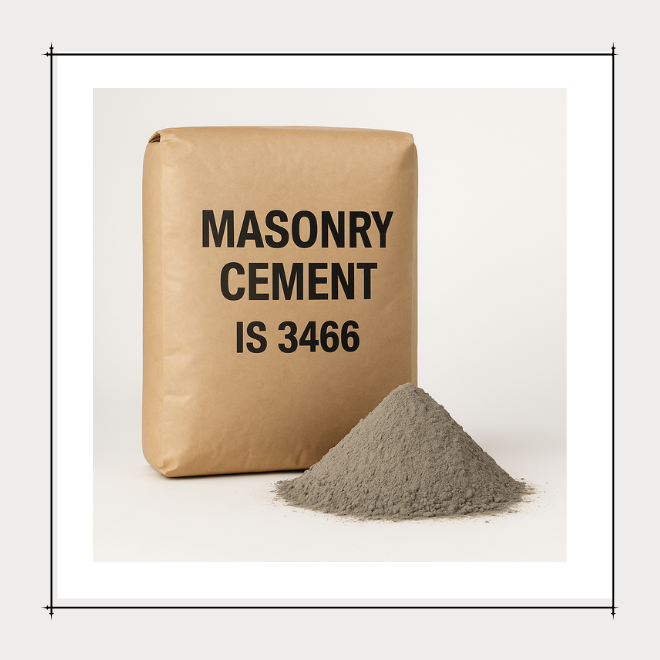
Masonry cement is a specially blended cement designed for use in mortar mixes for plastering, brickwork and blockwork. The Indian Standard - IS 3466:1988 is titled as “Specification for Masonry Cement (Second Revision)” specifies that the manufacturing, chemical and physical requirements of masonry cement is general for all purposes where the mortars are required for masonry.
In simple terms: masonry cement is made by inter-grinding of Portland cement clinker with the certain pozzolanic or non-pozzolanic materials (such as fly-ash, limestone, slag, dolomite), air-entraining plasticiser and additives like gypsum, then the final product meets the performance demands for masonry mortars.
This standard ensures that the material used for masonry mortar works reliably in terms of strength, setting, durability and consistency.
Purpose / Why BIS Certification is Needed for IS 3466
Certification Process
For a detailed, step-by-step BIS certification process for masonry cement or any product visit:
For Domestic manufacturers
For Foreign manufacturers
Applicable BIS Scheme
For masonry cement under IS 3466 the relevant conformity assessment scheme is Scheme-I (Product Certification Scheme) of BIS, wherein the BIS Standard Mark (commonly called the ISI Mark) is used.
And applicable BIS scheme for Foreign Manufacturers is FMCS (Foreign Manufacturers Certification Scheme)
Documents Required for BIS Certification
Typical documents categories for masonry cement as per IS 3466 listed below:
Also, for foreign manufacturers who are exporting to India must appoint an Indian representative and ensure for factory inspection and testing compliance.
Testing & Labelling Requirements
As per the Product Manual for IS 3466:1988, the following tests are required for masonry cement: fineness, initial & final setting time, air content, water retention, soundness, compressive strength, staining.
Packaging must conform to IS 3466:1988 marking requirements. Each bag or drum is intended for sale after grant of licence must bear the BIS Standard Mark/ISI mark along with the licence number, manufacturer’s name and batch details.